You are probably familiar with Maslow’s hierarchy of needs. It appears as a triangle with physical needs like food, clothing, and shelter, on the base, with safety stacked right above. It purports that until these foundational needs are met one cannot move on to love/belonging, self-esteem, and self-actualization. I used to agree with Maslow, but not anymore.
My Church, The Connection, is a Matthew 25 Church. We literally feed the hungry, give drink to the thirsty, clothe the naked, welcome the stranger, and visit the sick and the imprisoned. We do not do the acts of Matthew 25 because we think these poor people will never amount to anything if we do not give them their basic needs. We do not think they must have three meals a day and a roof over their heads before they could ever begin to grasp concepts of love or belonging. We do these things first because Jesus told us to and, secondly, because these are valuable people with beauty and strength already within them. We really love them. Jesus chooses the least of these not because he feels sorry for them, but because he sees their worth. Jesus loves them.
Applying Maslow’s hierarchy to our spiritual life assumes that the homeless, or the poor, are incapable of a relationship with God and cannot reach a higher sense of spiritual fulfillment due to their lack of basic necessities and security. This is completely contrary to the Gospel! At the core of our being we long for a relationship with God and a sense of spiritual belonging no matter if our physical needs are being met or not. “As the deer pants for streams of water, so my soul pants for you, my God. My soul thirsts for God, for the living God” (Psalm 42:1-2). Lacking basic necessities or security does not negate one’s desire or capacity for a fulfilling spiritual life or for self-actualization.
God forgive our arrogance in thinking that someone’s lack of consistent food and shelter makes them unable to develop as human beings.
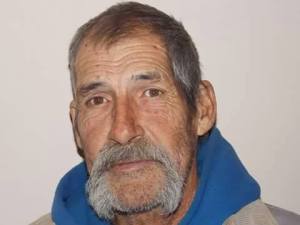
Greg was one of our homeless people at The Connection. He passed away on April 3, 2015. Greg had been on the streets for six years and for the past two years he was an integral part of our Church. As people shared their stories about Greg at his memorial service last week, it was amazing to hear the impact he had on so many. He started out as a guest of Haven Street, our feeding ministry to the hungry. Then he began serving in the kitchen, and then Greg became a regular part of Sunday worship. People could see the change in him. Openness. Compassion. Service. Joy. This sounds a lot like love/belonging, esteem, and self-actualization, doesn’t it? All the while, Greg lived on the streets and the only meals that I know he could count on were Sunday lunch and Monday dinner at our Church. What Greg needed was more than a meal and a home. Greg needed a place to be loved and accepted, where he could experience God. Greg found that among the people of The Connection.
You see, the initial meal we offered Greg began our relationship, but two plates of food a week did not satisfy the base of Maslow’s hierarchy nor did it suddenly motivate Greg to desire God. That desire was already there and was intensified by the relationships he discovered at The Connection, even while he remained homeless and food insecure. Greg’s spiritual need, his capacity to have that need fulfilled, and his ability to give back, was in no way diminished by his lack of food and shelter.
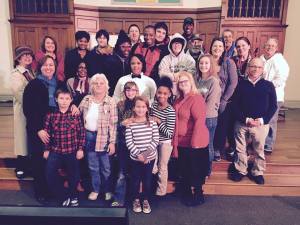 This past fall Greg was in our Church play called LESS. The powerful ending of our play had each homeless character step forward and recap their story. Greg passionately spoke these final words of his character, “My name is Sam. I wasn’t always like this (sweeping arms across his self)…I am wounded… inside (puts hands to his chest, over his heart) ….. I am homeless…. but I am not use – less.” At the conclusion of the play all of the homeless characters stood across the stage and said in unison, “I may be homeless, but I am not LESS.”*
You can believe that. Amen.
Hear more of The Connection story and be a part of giving love, sharing community, and meeting the physical needs of the hungry and homeless at http://www.youcaring.com/tish
*Ellis, Elaine. LESS. A play about homelessness. Performed at The Connection United Methodist Church, St Louis, MO., 2014.

 Rev. Dr. Letisha Green
Leave a comment